

Home is not only where we rest. It is where patterns repeat, roles harden, and silent agreements shape daily life. We have seen many people speak of peace at home while carrying tension in their bodies, confusion in their speech, and distance in their closest bonds.
Systemic responsibility at home means seeing how our actions, omissions, moods, and roles affect the whole household.
When we bypass that responsibility, we often look calm on the surface. Yet the system pays the price. A child becomes anxious. A partner turns cold. A parent grows resentful. Nobody says the full truth, but everyone feels it.
Below, we will look at seven indicators that show this bypass may be happening in your home.
1. We keep blaming one person for the emotional climate
Some homes quietly choose a “problem person.” It may be the angry teen, the distant spouse, the controlling parent, or the sibling who always reacts. Once that role is fixed, everyone else feels less pressure to reflect on their part.
We have seen this many times. One person acts out, and the family says, “There is the issue.” But the outburst may be carrying tension that belongs to the system, not only to the individual.
One symptom can protect many silences.
When one person holds the blame, the rest of the house avoids a harder question: what are we all maintaining together?
2. We confuse peace with avoidance
Some households are proud that they “do not fight.” At first, that sounds healthy. But in practice, it may mean people swallow truth to keep the room stable.
If apologies never happen, disagreements disappear too fast, or honest topics are always delayed, there may be no real peace at all. There may only be fear of disruption.
In our experience, avoidance often sounds polite. People say:
“This is not the right time.”
“Let us not make this bigger.”
“We should just move on.”
Those phrases are not always wrong. But when they become the house style, pain goes underground. For deeper reflection on patterns like this, many readers benefit from our material on consciousness.
3. We speak about values, but the routines say something else
Many families say they value respect, presence, and care. Yet the daily structure may tell another story. Meals happen with screens. Requests are made only when someone is already overloaded. Listening is promised but rarely given.
Values are not proved by speeches at home. They are shown by repeated acts.
This gap between stated values and lived behavior is one of the clearest signs of bypassing systemic responsibility. Why? Because it lets us feel morally right without changing the pattern.
We think this is where honesty becomes simple and hard at the same time. If the house says love matters, can we see love in the schedule, in the tone, and in the way effort is shared?
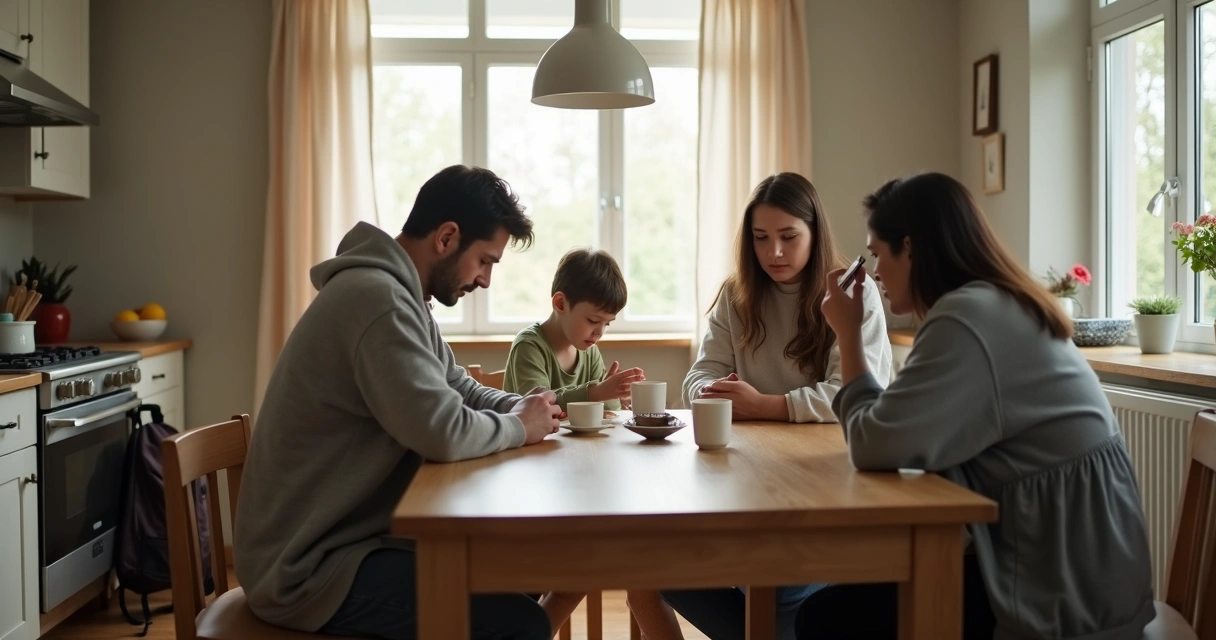
4. We expect children to carry more than they should
This sign deserves care. In some homes, children become emotional managers. They comfort adults, read the room, stay small, and learn early that their safety depends on not adding weight.
That is not maturity. It is burden.
Public health data gives this issue real social weight. Research tracking child abuse and neglect referrals across demographic groups shows that some children are systemically more exposed to harm and instability. While every home is unique, the pattern is clear: when adults do not hold responsibility, children often absorb the cost.
We should ask with sincerity:
Does a child in this home feel responsible for adult moods?
Do they hide needs to avoid conflict?
Do they seem “too mature” for their age?
If yes, the system may be asking them to carry what belongs to adults.
5. We talk about fairness, but roles stay rigid
Rigid roles are easy to miss because they often look normal. One person always organizes. Another always earns. Another always gives in. Another always gets excused.
At first, this may feel efficient in a practical sense. But after a while, fixed roles stop being support and start becoming identity traps. The caregiver cannot rest. The “strong one” cannot break. The “difficult one” cannot change because the system expects them not to.
We have noticed that homes grow healthier when roles can move. Shared life asks for flexibility, not silent contracts written years ago.
If this theme speaks to you, our articles on behavioral science and human values can widen the view.
6. We use insight as a substitute for repair
Some people understand the pattern very well. They can name their triggers, explain family history, and describe emotional wounds with clarity. Yet nothing changes in the room.
Insight without repair is one of the most refined forms of bypassing.
We say this with respect because self-awareness is good. Still, awareness alone does not wash dishes after an unfair week. It does not change tone after harsh words. It does not rebuild trust after months of distance.
Real responsibility appears in repair. That may mean:
Making a direct apology without excuses
Renegotiating tasks in the house
Stopping sarcasm that has become normal
Creating regular time for honest check-ins
Thought matters. Action completes it.

7. We wait for crisis before taking responsibility
This last sign is common. Many people do not act when there is strain. They act when there is damage. A breakup threat, a child’s collapse, deep resentment, or total emotional shutdown suddenly forces truth into the open.
But systems usually whisper before they break. A door closes harder. A joke cuts more sharply. A person goes quiet for weeks. Small signs come first.
We believe mature homes are not the ones with no tension. They are the ones that respond early. Readers who want to deepen this skill often spend time with our writing on emotional maturity, and some also like following reflections from our editorial team.
Conclusion
Bypassing systemic responsibility at home rarely looks dramatic at first. It can look thoughtful, spiritual, patient, or even kind. That is why it is easy to miss. Yet if one person is overloaded, children are adapting too much, conflict is avoided, and repair is postponed, the home system is speaking.
A healthy home is not built by good intentions alone, but by shared responsibility made visible in daily life.
We grow when we stop asking who is at fault and start asking what the system is asking each of us to face. That question changes the room. Slowly, but for real.
Frequently asked questions
What is systemic responsibility at home?
Systemic responsibility at home is the practice of seeing the household as an interconnected whole. It means we notice how our behavior, silence, tone, and routines affect others, and we take our part seriously instead of placing all strain on one person.
How can I spot bypassing at home?
We can spot bypassing by watching for patterns such as chronic blame, conflict avoidance, vague apologies, rigid roles, and children acting like emotional caretakers. Another sign is when people talk with insight but avoid practical repair.
Why is systemic responsibility important?
It matters because home patterns shape emotional safety, trust, and development. When responsibility is shared, relationships become clearer and less reactive. When it is avoided, tension spreads through the system and often lands on the most sensitive members.
What are common signs of bypassing?
Common signs include blaming one person for the family mood, calling avoidance “peace,” saying one set of values while living another, overloading children emotionally, keeping fixed roles, using insight instead of repair, and waiting for crisis before making changes.
How do I improve responsibility at home?
We improve it by telling the truth with respect, reviewing hidden roles, repairing harm directly, sharing tasks more fairly, and paying attention before tension becomes a crisis. Small consistent actions often change a home more than large speeches do.