

Understanding ourselves can feel complicated. When we talk about mapping the soul, we refer to a practical and structured approach to illuminating the deeper layers of our consciousness, emotional patterns, and behaviors. As we listen to life stories from people we meet, there is always an undercurrent of yearning for self-knowledge and clarity—sometimes spoken, sometimes silent. We believe that creating a personal soul map is one answer to these longings, offering both structure and meaning on the journey to self-awareness.
The foundation of a soul map
A soul map is more than just a metaphor. In our experience, it is a framework that connects ideas from philosophy, psychology, behavioral science, and conscious living. This living map brings together different parts of the self: our history, emotions, values, and aspirations. It can guide daily choices, open up new possibilities, and help us respond with insight rather than impulse.
A well-built soul map sheds light on the patterns that repeatedly shape our experience and the stories we tell ourselves. It is not about changing who we are, but about understanding the roots behind why we feel, act, and think as we do.
The five elements of mapping your soul
When we discuss mapping the soul, we often use a five-element structure that brings coherence to the process:
- Philosophy of meaning – The values and beliefs that shape direction.
- Emotional reading – Awareness of internal feelings and patterns.
- Conscious practices – Mindfulness and meditation for presence.
- Systems awareness – The family, work, and social environments that influence us.
- Values in action – The external impact of our choices.
Each element reveals a different dimension of who we are. Each interacts continuously with the others, supporting lasting change rather than temporary reassurance.
Why map your soul?
We are surrounded by information, yet many of us experience uncertainty about personal and professional direction. In our research and direct work, we found that soul mapping can:
- Clarify patterns of self-sabotage and limiting beliefs
- Bring coherence between emotions and actions
- Raise awareness of unconscious motivations
- Strengthen emotional maturity
- Promote purpose-driven choices
Soul mapping is one of the ways to transform emotional confusion into clarity and conscious motives into real change.
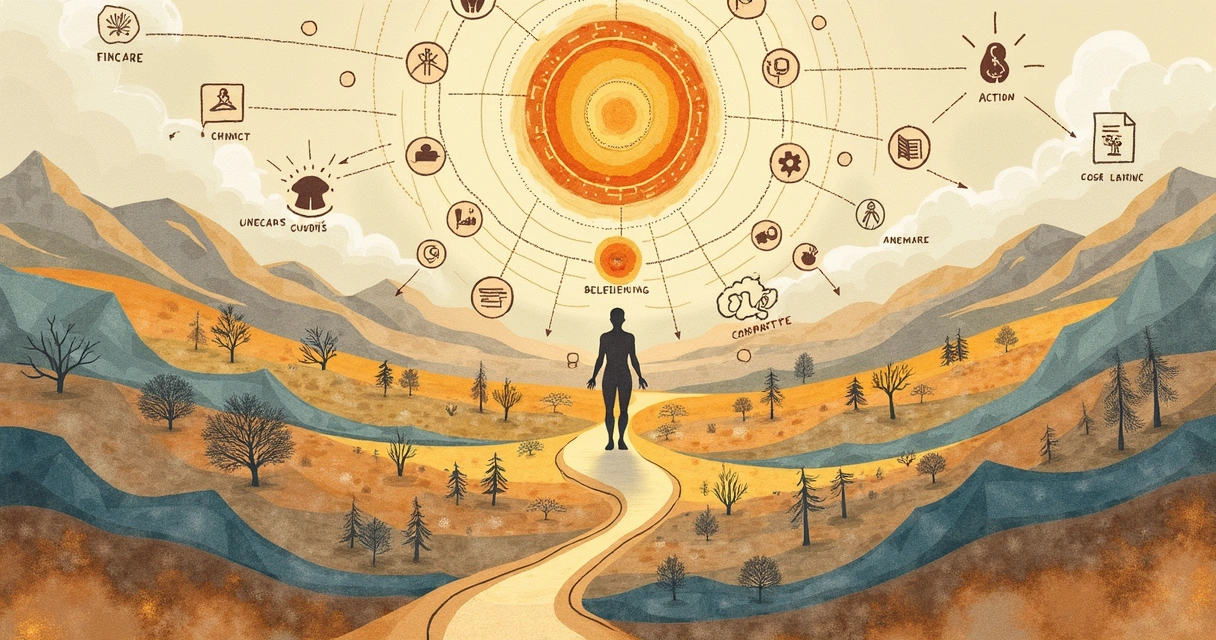
Step-by-step: How to create your soul map
Based on years of practice, we have found a step-by-step approach guides most people through the process. The soul map is always personal, but these steps provide structure for the journey:
1. Start with intention
Begin by clarifying your intention. Why pursue a soul map? Are you seeking emotional healing, alignment in life choices, or insight into repeated challenges? Write a short statement to keep focus as you move through the process.
2. Gather your story
Your story matters: include family legacy, formative moments, values, and difficult periods. Write, draw, or record these stories. No one else needs to see them. This step opens the doors to self-reflection and emotional reading.
3. Track your emotional terrain
Observe recurring emotional patterns—joy, anger, fear, shame, love. Notice what situations trigger them. We recommend using simple mindfulness or meditation practices to support this process, since research like the study from The Pennsylvania State University shows meditation increases positive emotions such as calm and relaxation. Journaling after meditation can reveal patterns more easily.
4. Identify core beliefs and values
Reflect on questions like, “What do I value most?” and “Which habits reflect those values, and which do not?” Working through this, we often discover gaps between stated values and lived actions. In research, mindfulness-based interventions have been found to strengthen emotional clarity, helping us see underlying beliefs more clearly.
5. Explore your place within systems
We all belong to various systems—family, work, culture, society. These systems shape us, but they can also become sources of unconscious patterns. Mapping your place in these systems can reveal “inherited” beliefs or patterns that aren’t truly your own. We see this awareness as a bridge between psychology and behavioral science. For more on systems and behavior, refer to articles related to behavioral science.
6. Integrate and reflect
Combine all this information—emotions, history, beliefs, values, systems—into a visual or written soul map. There is no single format. It can be a mind map, a series of circles, a flow chart, or even a creative collage. What matters is that it feels true for you.
The most meaningful map is the one you create for yourself.
7. Revisit and update your map
Your map will change as you grow. Life transitions can shift values and beliefs. We encourage setting aside time every few months to review and adjust. This keeps the map alive and practical.
Tools to support the journey
As more people turn to meditation and mindfulness, these practices become key companions for mapping the soul. The National Health Interview Survey reports that meditation usage in the U.S. has more than doubled in the last two decades. In our own experience, meditation is an anchor that enhances clarity and grounds the mapping process.
We have also seen, through a meta-analysis from Psychological Bulletin, that meditation significantly reduces negative emotions and strengthens emotional well-being. Its strongest effects emerge in relationships, which ties directly back to our connections within systems.
Measuring your transformation
Emotional maturity is often the first visible sign that a soul map is working. Research consistently shows that those who engage in mindfulness, reflection, and emotional mapping report higher levels of contentment and less confusion about life direction (see this analysis by the National Center for Complementary and Integrative Health).
For those wanting to deepen this process, related topics like emotional maturity, consciousness and meditation provide practical guidelines.

A story of transformation
We recall a client—let’s call her Maria—who began her map during a time of deep confusion. She started by writing her life story, layer by layer, until she identified a source of pain repeated through generations. Through mapping, Maria directly saw how this shaped both her relationships and career decisions. The map didn’t “solve” every problem, but it gave her clarity, emotional peace, and a direction that fit her own values. Stories like Maria’s show that even small steps lead to lasting change.
Integrating values and impact
Soul maps have a practical dimension: they help us make values real in daily life. They highlight areas where values and actions align, and where they do not. For people interested in the connection between values, consciousness, and real-world effect, further reading on human values is insightful.
The more we act from a clear internal compass, the more our impact extends beyond ourselves into organizations and communities.
Conclusion
Soul mapping is more than self-reflection; it is a practice that brings together emotion, behavior, meaning, and conscious impact. By structuring your journey with intention, ongoing self-observation, and regular updating, the soul map becomes a living guide to a more mature, balanced life. As the research and our firsthand experiences show, the benefits are both deep and lasting—from greater emotional clarity to stronger, values-based decisions in everyday life.
Frequently Asked Questions
What is a soul map?
A soul map is a structured representation of your inner world that brings together your life story, emotional patterns, beliefs, values, and how you relate to others and the world. It is a tool to make sense of repeated experiences, clarify motives, and guide conscious decisions.
How to create a soul map?
To create a soul map, begin with a clear intention about what you hope to discover. Gather your personal history, track emotional patterns, identify key beliefs and values, explore your place within systems, and then integrate these insights visually or in writing. Bring in meditation and self-reflection practices for deeper clarity, and don’t forget to review and update your map over time.
Why should I map my soul?
Mapping your soul can give you emotional clarity, bring coherence between feelings and actions, illuminate unconscious patterns, and help you make purpose-driven decisions. It supports lasting personal growth and makes your values practical in daily life.
Is mapping your soul worth it?
From our observations and studies, yes, mapping your soul is worth it if you seek better self-understanding, emotional maturity, and stronger direction. The process may require honesty and patience, but the gains in clarity and consistent decision-making are often significant.
Where to find soul map guides?
You can find guides in books, online articles related to consciousness, emotional maturity, human values, and meditation, and from professionals in psychology and behavioral science. Internal resources such as those focused on consciousness, emotional maturity, human values, meditation, and behavioral science offer helpful starting points.